By Patty Feng, Director of the Compliance Center at PatientsForce
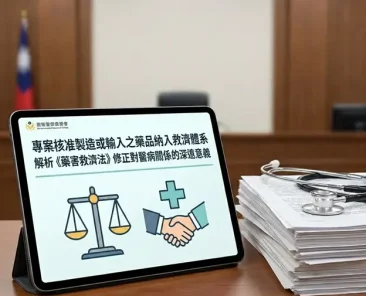
In modern medicine, drug treatment is a “double-edged sword”, and efficacy often coexists with risks. With the passage of amendments to Articles 3 and 28 of the Drug Harm Relief Act on January 30, 2024, the Legislative Yuan officially included “specially approved drugs manufactured or imported” into the relief system. This advancement in regulations not only fills the gap in the social safety net but also rebuilds a bridge based on trust and security for both doctors and patients on the front line of clinical practice.
Removing the “moral shackles” of clinical decision-making
For a long time, when there is a shortage of drugs in China, or when special drugs that have not yet obtained domestic drug licenses are introduced for rare diseases and urgent medical needs, the three parties of medicine, disease, and medicine are often in a vacuum of regulatory protection.
Unlocking Doctors’ Professional Choices: In the past, when recommending the use of special drugs, doctors not only considered clinical evidence (EBM) but also had to bear the psychological burden and legal risks of “in case of serious side effects, patients will have no way to complain.” After the revision of the regulations, the system officially became the backing of medical decision-making, allowing doctors to return to their profession purely without having to resort to “defensive medicine” due to fear of the lack of the system.
Implement equality in the life of patients: For patients, whether they use conventional drugs or life-saving special drugs, the weight of their life value is equal. The amendment eliminates discrimination in relief based on “drug status” and ensures that every subject or user can receive financial compensation and medical support from the state in the event of unforeseen drug harm.
From “litigation opposition” to “risk community”
The tearing of the doctor-patient relationship often stems from the unclear ownership of responsibility and the heavy economic pressure after the injury occurs. The essence of the drug damage relief system is the concept of “no-fault liability” social insurance, and the buffer effect brought about by its amendment is crucial:
1. Reduced Conflict Incentives: Immediate relief payments can alleviate the urgent needs of the victim’s family, effectively reducing the motivation to turn unfortunate events into medical proceedings.
2. Role Transformation: Physicians transform from potential “defendants” to “professional partners assisting patients in applying for relief.” By assisting in the collection of clinical data and side effect reporting, healthcare professionals and patients can stand on the same front and jointly combat the challenges posed by drug uncertainty.
Strengthen the national drug safety monitoring network
From the perspective of drug safety surveillance (Pharmacovigilance), the inclusion of imported drugs in the project has the significance of a positive cycle of data collection:
Increase the enthusiasm of reporting: In the past, due to the lack of relief incentives, side effect reports of special drugs may be omitted. Now, with the implementation of relief rights, clinical notification will become more accurate.
Establish a local database: These data will become important indicators for Taiwan to evaluate the safety of special drugs, forming a defense system of “early warning, timely relief, and optimized medication”.
The amendment to the “Drug Harm Relief Law” is not only a cold change in the law, but also a deep respect for the essence of medical care. When the legal system can steadily catch the uncertainty in the medical process, doctors dare to open up the boundaries of treatment, and patients dare to deliver life trust. The improvement of this protective net symbolizes a crucial step towards a more civilized and resilient medical environment in Taiwan.