PatientsForce
Media Feature2026-05-25

Media feature — from treatment to support: how PatientsForce builds a one-stop patient support ecosystem with MediPASS

Media feature — from treatment to support: how PatientsForce builds a one-stop patient support ecosystem with MediPASS

Taiwan's national health insurance has long been internationally admired, with consistently high public satisfaction. Yet as medical technology advances and disease patterns shift, modern healthcare is extending beyond 'treatment itself' toward managing and supporting the whole treatment journey.

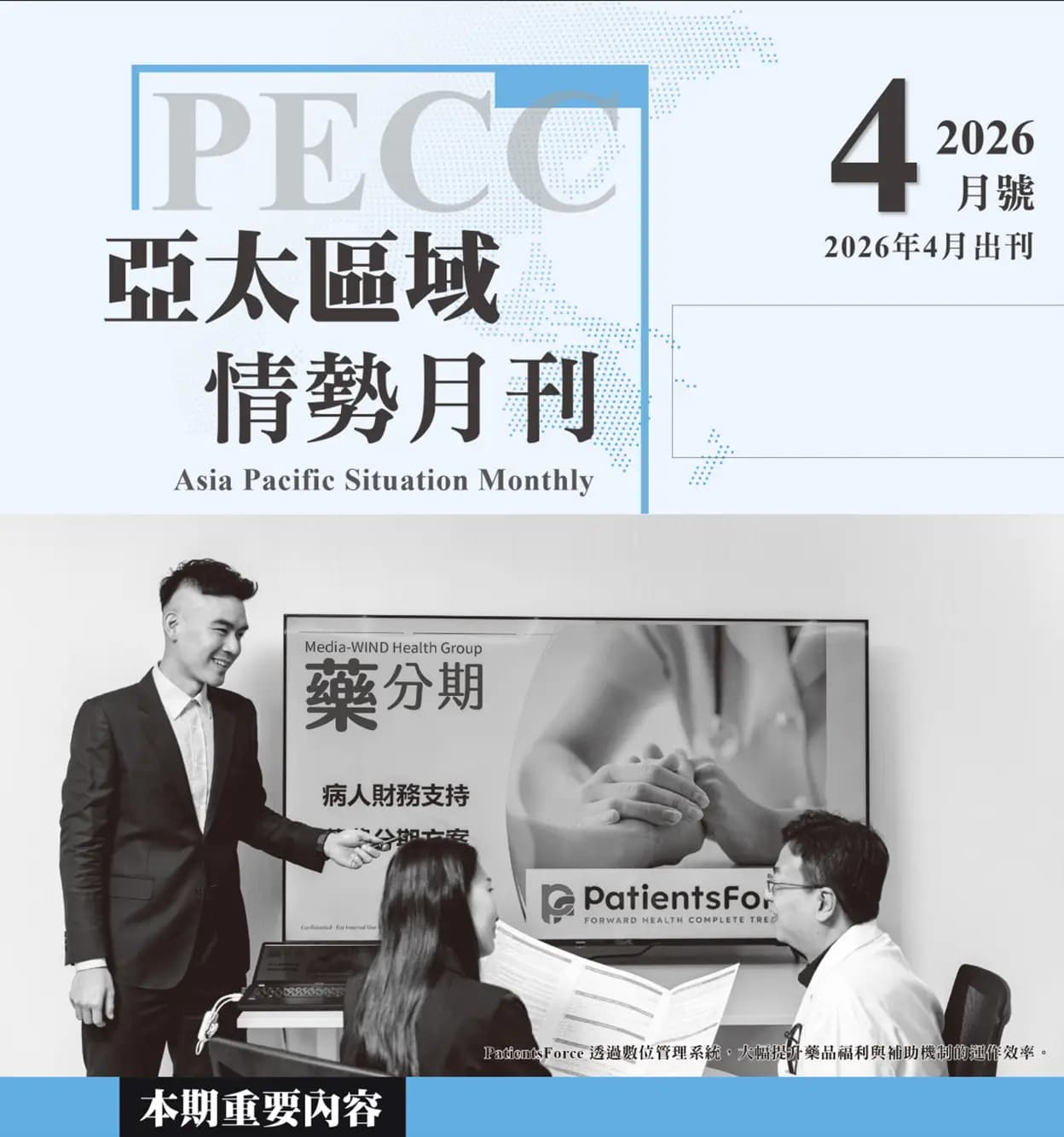
The Asia-Pacific monthly published by the Chinese Taipei Pacific Economic Cooperation Committee (CTPECC) recently interviewed PatientsForce COO Evie Wang about how, within a complex institutional environment, a company can build an inclusive, end-to-end health management system through digital platforms and service innovation.

The overlooked reality of healthcare: decisions, costs and information gaps

Wang points to a key observation: healthcare is not simply 'seeing a doctor and getting a prescription' — it is a chain of decisions that requires integrating information and judgment.

Take cancer treatment: a single course can cost hundreds of thousands of NT dollars, and options differ enormously in efficacy, side effects and financial burden. Yet today's support resources — medical services, insurance claims, social resources — sit in separate systems. Newly diagnosed patients must cross a huge information threshold to make major decisions in a short time. Improving the intelligibility and accessibility of information is therefore central to advancing health equity.

Building MediPASS: a one-stop patient support ecosystem

Facing the challenge of connecting services across systems, PatientsForce pursues its vision of 'Forward Health, Complete Treatment' by integrating previously scattered services into one place:

  • Front end (education and communication): raising disease awareness and willingness to seek care.
  • Middle (patient support, PAP/PSP): helping patients access medicines, easing financial burden, with professional nurses managing and tracking the course of therapy.
  • Back end (long-term care hand-off): extending to visit accompaniment, family coordination and other long-term care services for a smooth transition.

To realize this architecture, the team built the MediPASS platform, combining widely used social messaging channels with a back-office management system, so patients, physicians, case managers and caregivers can interact efficiently in one place. The digital design lowers the transaction costs of time and information searching, and its systematized, paperless workflows also serve environmental sustainability.

International governance standards and APEC health policy goals

In PSP governance, PatientsForce emphasizes compliance and responsibility. Beyond connecting each step of the journey through the platform, the company holds ISO international certifications and participates in the PSCI supply-chain initiative, steadily raising transparency and patient experience.

As the Asia-Pacific faces aging populations and rising healthcare spending, APEC stresses digitalization and public-private collaboration to strengthen healthcare resilience. The patient support and benefits platform PatientsForce is building demonstrates the 'gap-filling and value-adding' role the private sector can play in a public healthcare system — a reference model for inclusive growth in the region.