
PatientsForce Companion: Post-Operative Readmission Rates Correlate with Daily Step Counts
Research published in international journals in recent years confirms that a drop in a patient's walking volume after surgery correlates positively with the readmission rate. The study followed 215 patients with a mean age of 63; by monitoring them with a mobile device after discharge, it could accurately predict that a post-operative patient whose daily walking volume (step count) fell by more than half on two consecutive days after discharge was highly likely to be readmitted. The prediction was roughly 90% accurate, showing how important it is to monitor a patient's daily activity level as part of post-discharge care.
Ting Yu-chih, former senior head nurse of the cardiac medical and surgical ward at Taipei Veterans General Hospital, notes that continuing care after discharge is a pain point in healthcare today. Even when patients and their families do their best to follow the instructions given at discharge, the absence of ongoing monitoring and professional advice leaves most patients facing an uncertain road to recovery.
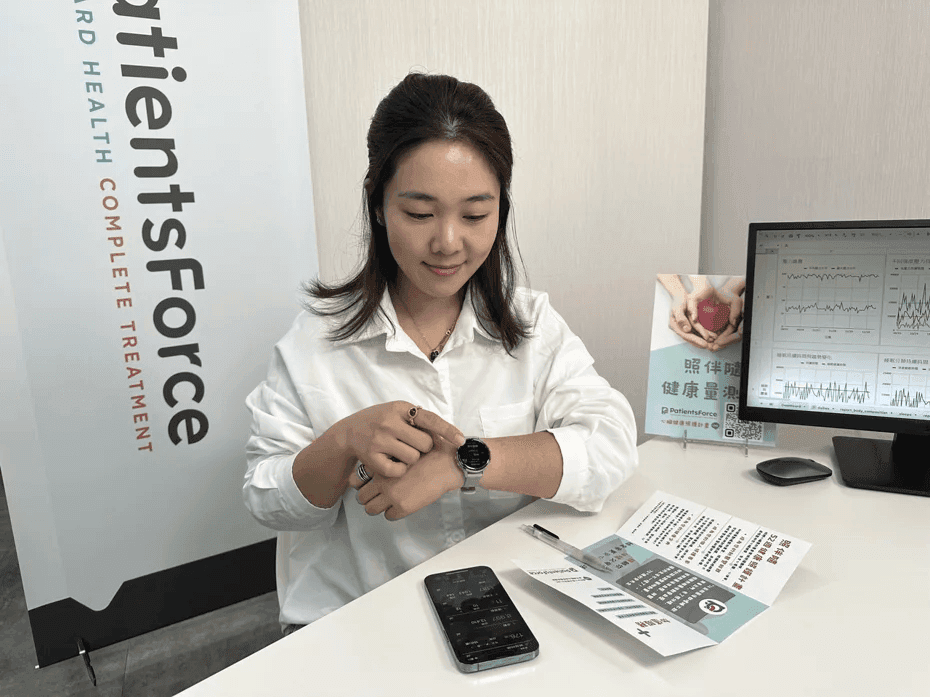
Media-WIND Health Group, which provides new-medicine benefit and patient support program management services, today introduced the PatientsForce Companion cardiovascular care program. The model pairs a Garmin health-monitoring watch from the original international manufacturer with a digital care platform that consolidates the data. Professional care managers review the indicator data collected from the wearable device and give each patient a personalised recovery plan and lifestyle advice. This individualised care helps improve recovery efficiency and also builds the patient's confidence. Combined with support from healthcare professionals delivering remote care services, patients can use the everyday LINE@ messaging app to consult, or arrange appointments with, a professional team of physicians, pharmacists, dietitians and rehabilitation therapists.
Nurse Ting says this innovative home-care model does more than give patients and families more reassuring, more efficient companion care through recovery: it also gives healthcare professionals a new tool that helps them deliver a continuous recovery management plan and improve adherence to medical instructions. Continuing care can then extend from the hospital to the individual, providing affordable care services with a clear purpose, and — through closer information integration with healthcare institutions — achieve genuinely patient-centred care.
Source: UDN Health