
The Cost of Illness Podcast
The Cost of Illness is a health-and-money podcast made for patients and caregivers. Combining health, personal finance and law, it unpacks the real problems that arrive after diagnosis and makes every post-illness decision easier to understand.
Season 3
24 episodes
Using policy value to bridge a crisis — and bringing an old policy up to date
Most people think insurance only pays out after the event, but an asset-type policy is also a source of liquidity. Ting Hsiao-ling of Everpro Insurance Brokers explains how policy loans work, where the lapse-and-reinstatement traps are, and how to restructure an old policy without surrendering it.

Emergency surgery and NT$500,000 you don't have: four steps to raise it without wrecking your finances
Surrendering a policy in a hurry, dumping shares at the bottom, turning to high-interest lenders — panic decisions often cost more than the treatment. Wu Liang-min, senior vice president of Taishin Bank's consumer finance division, walks through reviewing your own assets first, using regulated bank facilities next, and building credit as a lifelong financial key.

Money you cannot spend: how Trust 2.0 carries out your wishes when illness takes over
The biggest risk in later life may not be having no money, but losing the capacity to use the money you have. Tseng Wen-min of Hua Nan Bank's trust department explains how Trust 2.0 works, how insurance proceeds trusts are endorsed onto a policy, and why a pre-opened trust is within reach of middle-income households.
Season 2

The longer you live, the pricier care gets: building a century-proof health asset
When longevity itself becomes a risk, the insurance industry undergoes a quiet revolution. Wang Pao-hsun, senior associate vice president of Nan Shan Life's health and market development division, unpacks wellness-linked cover 2.0, deferred reimbursement products, and how to structure cover at each stage of life.

If dementia comes, who decides for me? Guardianship orders and a financial safety net for later life
Lawyer Cheng Chia-hsin, legal adviser to the Taiwan Alzheimer's Disease Association, draws on caring for her own mother to explain how assistantship and guardianship orders differ, how voluntary guardianship lets you choose your own future decision-maker, and why a care trust is the most practical financial protection.

NT$20,000 a pill and still no payout — has your policy expired for the new medicine era?
Hundreds of thousands paid out of pocket — and then a refusal letter. Dr. Lin Min-hao of Cathay Life's health think tank argues that claims did not get stricter because of new accounting rules, but because twenty-year-old policy wording cannot keep up with twenty-first-century medicine.
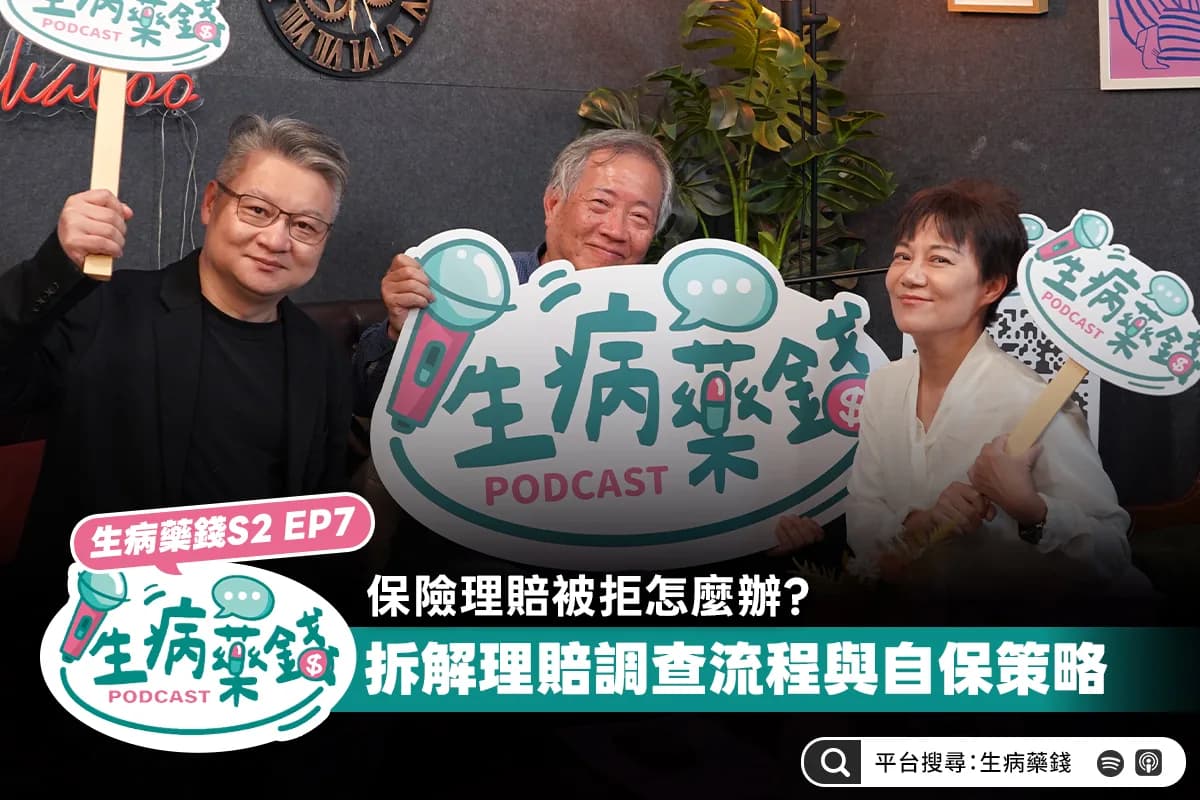
Denied a claim? Inside claim investigations, the legal meaning of 'accident', and how to protect yourself
People buy insurance for peace of mind, yet claims often stall. Veteran claims investigator and licensed loss adjuster Hung Ying-hsi explains what insurers actually investigate, why 'accident' is so hard to establish in law, and the legitimate routes open to a policyholder who has been denied.

A cross-border drug quest: a rare-disease mom's journey of love and awareness
Her child was diagnosed with Taiwan's first case — one of only about 20 worldwide — of early infantile epileptic encephalopathy type 53. From helplessness through a cross-border drug quest to making peace with exhaustion: a warm guide for special-needs families.
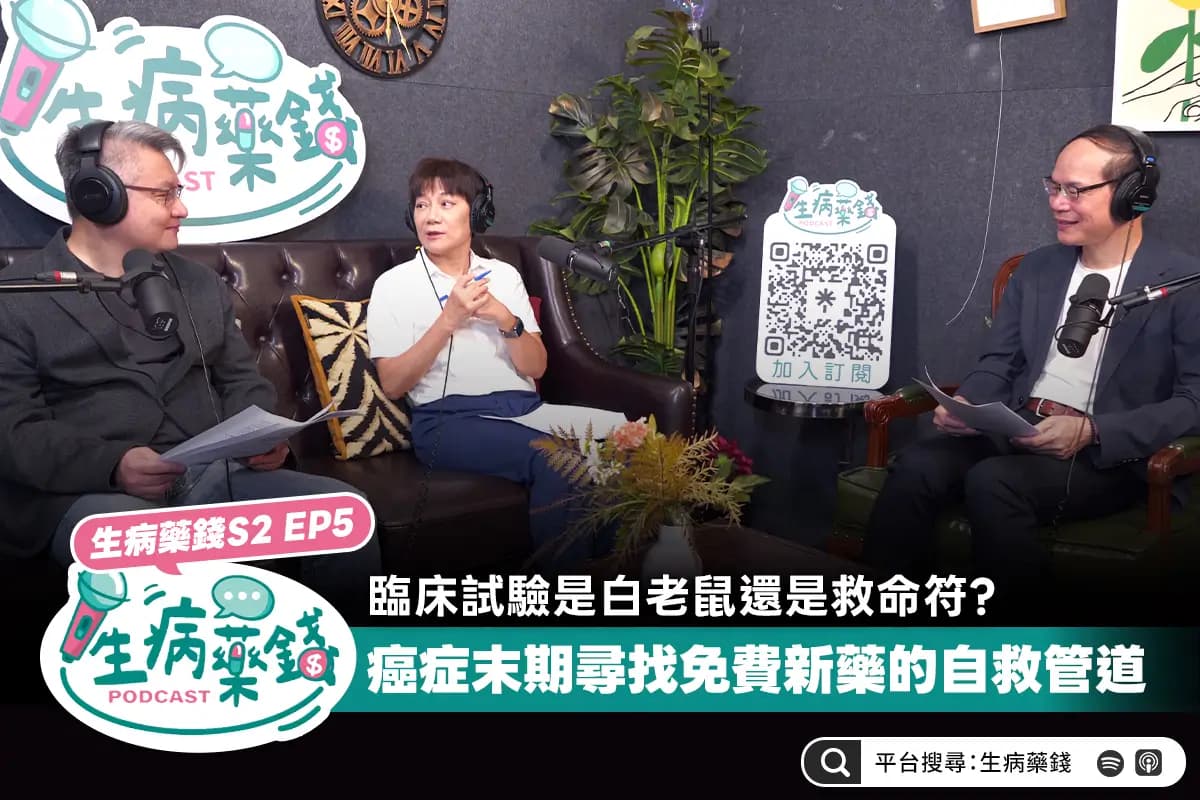
Clinical trials: guinea pig or lifeline? Unpacking free and subsidized routes to treatment
Alan Cheng, CEO of IUSEA biotech consultancy with nearly 30 years in multinational pharma, unpacks four legitimate self-help resources for families facing critical illness.
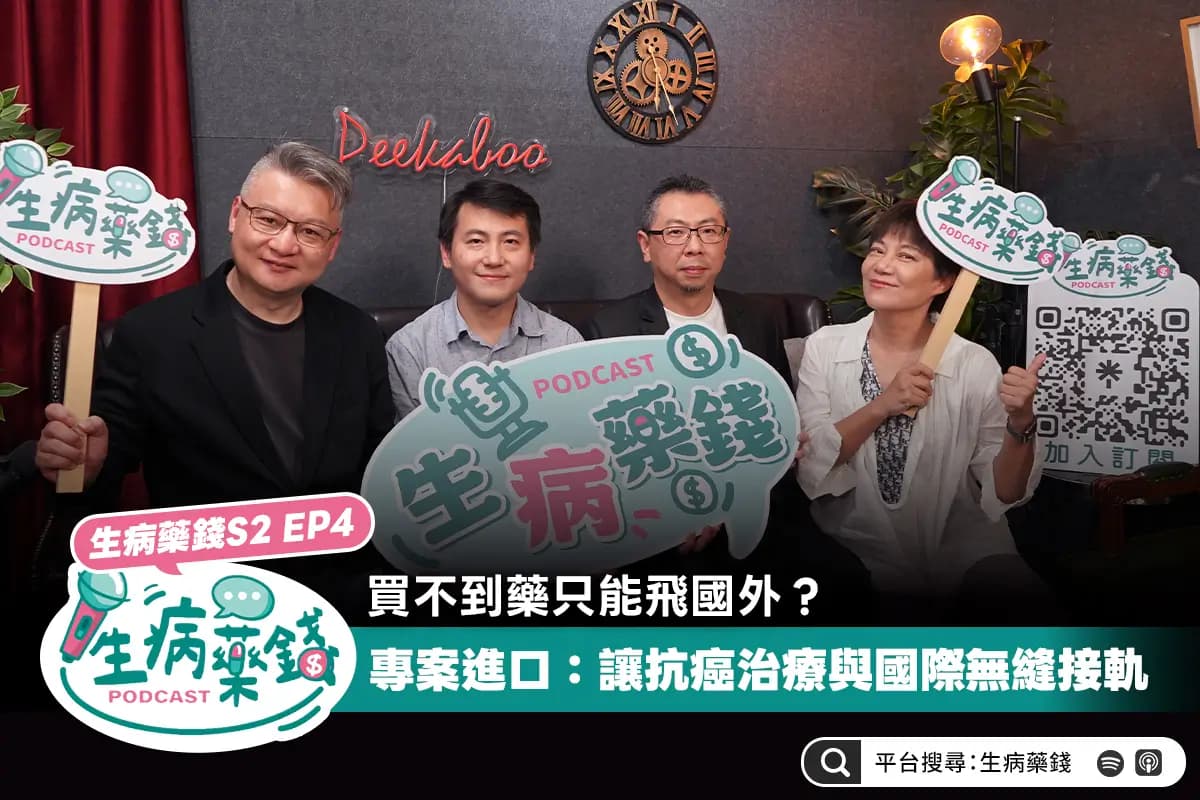
Can't buy the drug — must you fly abroad? Inside the special-import process that links cancer care to the world
When domestic options run out, there is a legal route under the Pharmaceutical Affairs Act besides seeking care abroad: special import. Dr. Chiang Yi-hao of MacKay Memorial Hospital and pharmacist Wang of Chuan Meng Biotech explain the process and cost realities.

Ending bedside disputes: Judge 'Octopus' on using the law to protect family dignity
When the hospital hands over a multi-million-dollar bill, who signs and who pays? Judge Chang Yu-feng, with 30 years on the bench, deconstructs medical contracts and the duty of support.
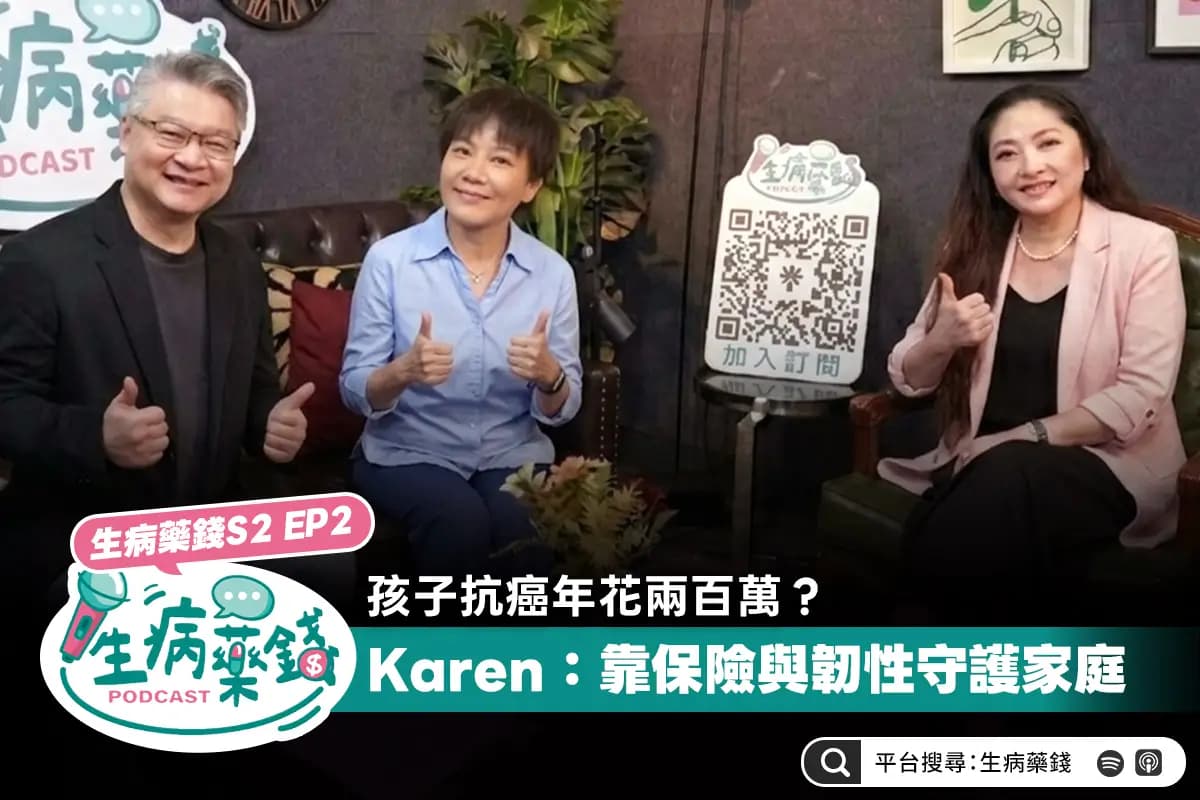
Two million a year for a child's cancer fight? Karen on insurance and resilience
Karen — NTU public health PhD and pharma professional — shares her child's cancer marathon as a mother: how a family builds financial and psychological defenses in the high self-pay era.

Second opinions in cancer care: precise decisions in the high self-pay era
Hematology-oncology authority Dr. Hsieh Jui-kun: many new cancer therapies cost one to two million NT dollars a year. How do you talk to your physician — and make your insurance work hardest?

May tax season savings: three keys to turning medical spending into deductions
Section chief Lin Yi-fei of the National Taxation Bureau reminds us: the medical deduction has no ceiling. Master five keys — person, institution, purpose, insurance, proof — to save smartly and legally.
Season 1
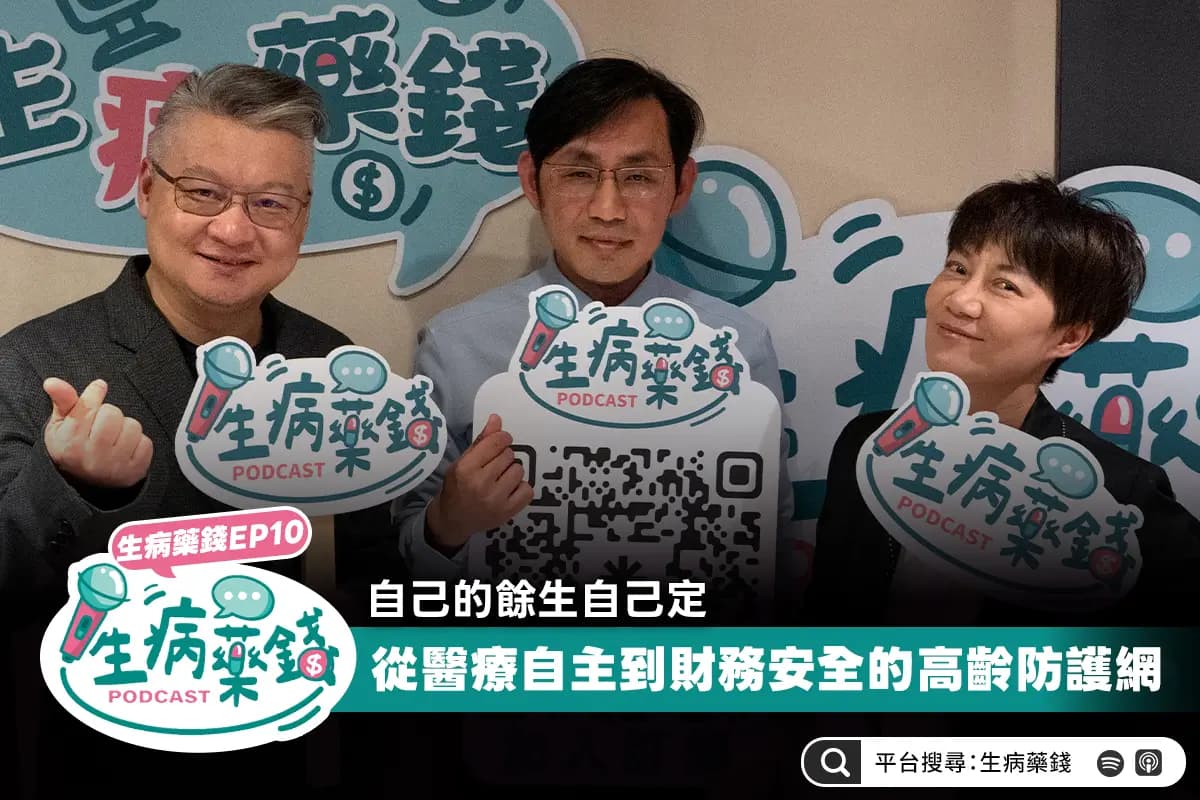
Deciding your own remaining years: a senior safety net from medical autonomy to financial security
Attorney Cheng Chih-yang: to live well with money to spend, plan on three fronts at once — medical autonomy, property control and legal representation.

Rare-disease drug bills in the tens of millions? Long-term survival strategies for rare-disease families
TFRD CEO Chen Kuan-ju: facing a rare disease, a family's way out lies less in savings than in understanding the system and using its resources.
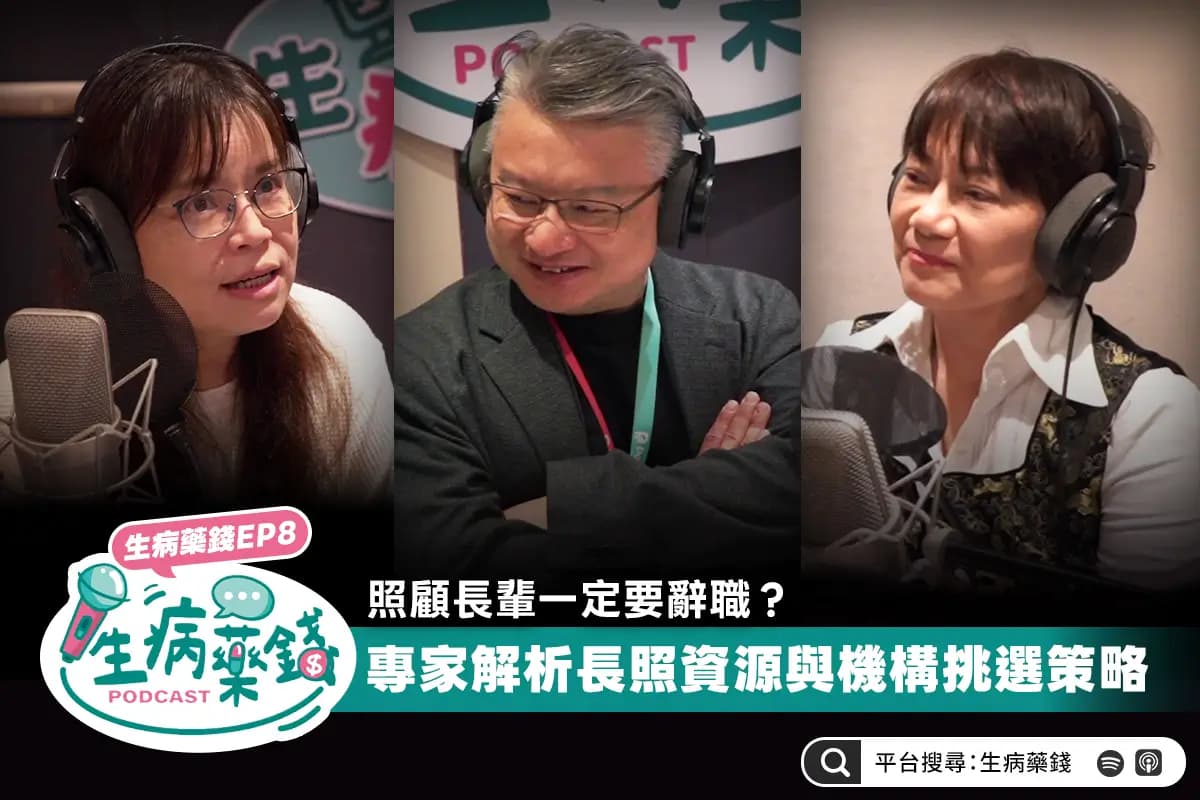
Must you quit your job to care for aging parents? Long-term care resources and how to choose a facility
Dr. Yuan Bi-ying, deputy superintendent of Qingfu Hospital: many long-term care tragedies begin with over-optimism about caring alone. Understanding public resources and hidden costs keeps families from collapse.

Must self-pay devices be the most expensive? Calculating true medical value
Dr. Lin Wei-wen, chief of cardiology at Taiwan Adventist Hospital: NHI is the set meal, self-pay devices the fine dining. The point is not the priciest option, but the best fit.
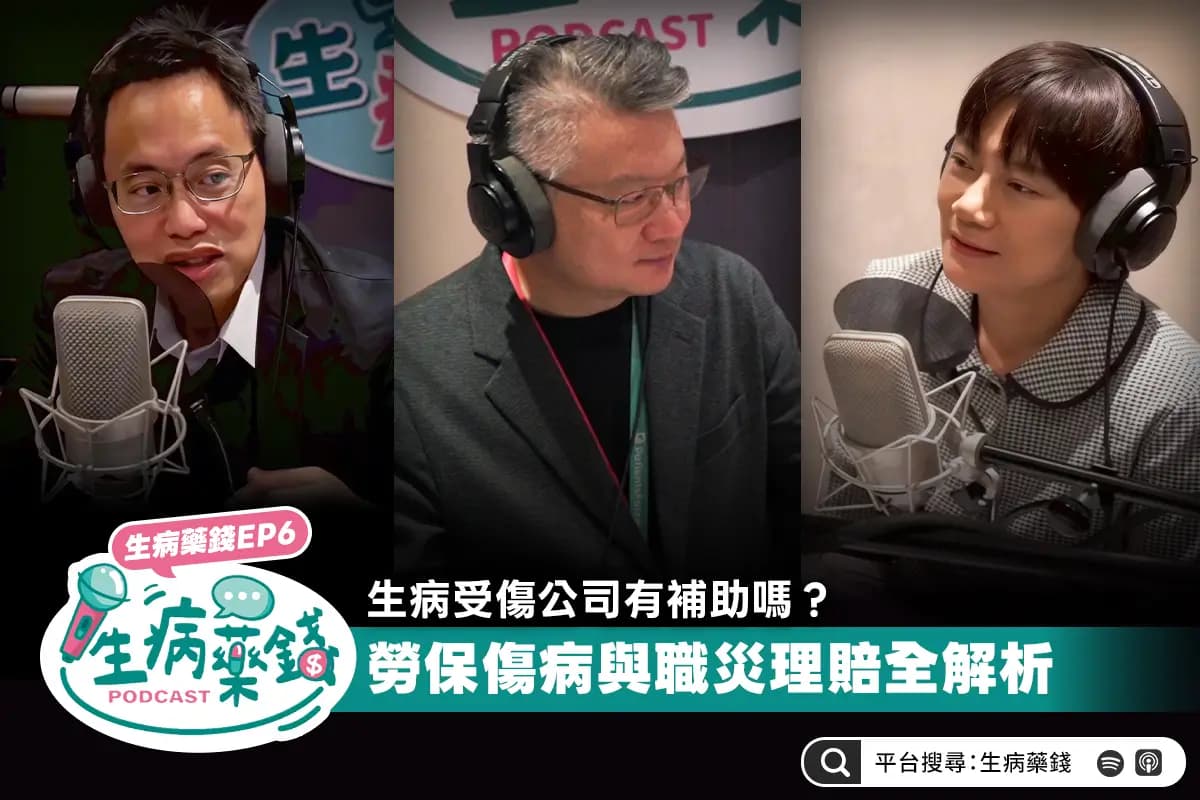
Does your employer owe you when you're sick or injured? Labor insurance and occupational injury claims, fully explained
Most failed claims are not bureaucratic obstruction — they stem from half-understood rules on ordinary sickness versus occupational injury benefits. Learn the rules and reclaim your wage compensation.

Old policies vs. new technology: what is 'medical necessity'? Cracking insurance claim disputes
Chairman Lo Chun-wei of the Financial Ombudsman Institution: insurance is a commercial contract of calculated risk — claims are never decided by who shouts loudest or seems most pitiable.

Don't be an insurance sucker: four claim-proofing rules to know before you see the doctor
Taiwanese pay an average of NT$144,000 in premiums a year and hold 9.7 policies each — yet claims often succeed or fail on pre-visit preparation. Insurance is not a talisman; it is a written commercial contract.
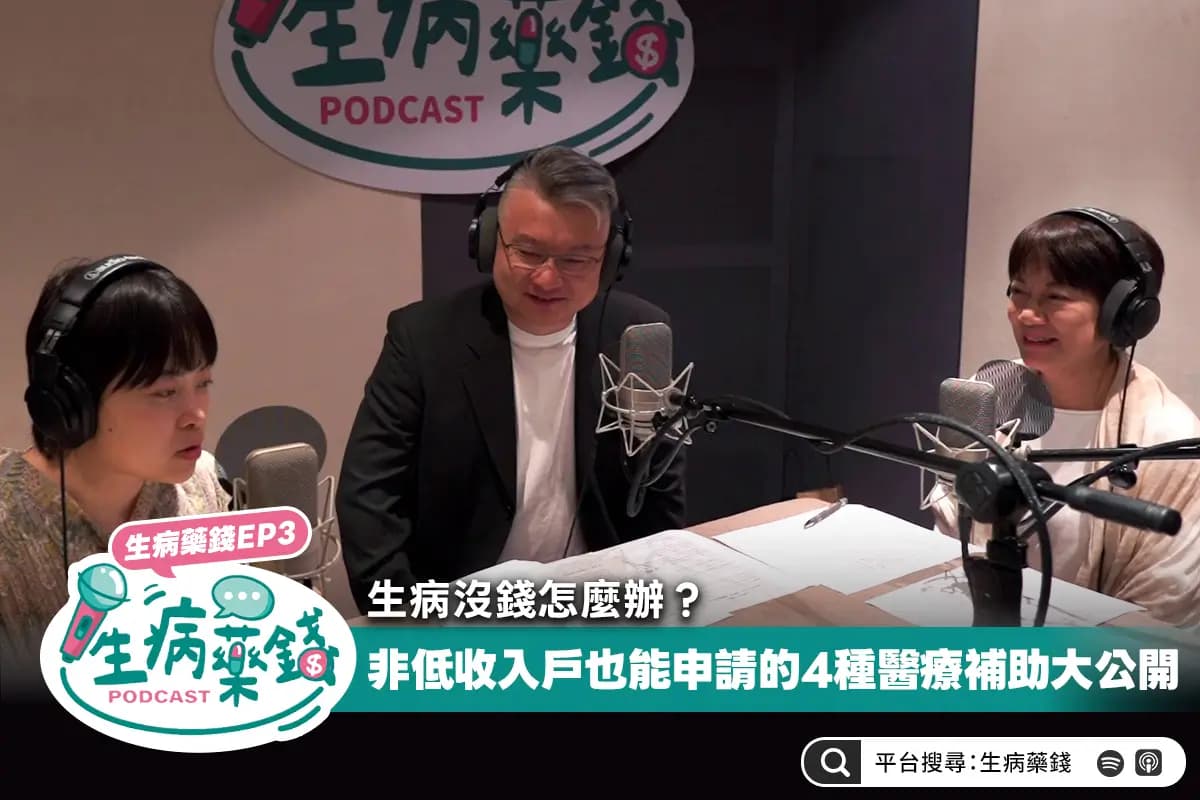
Sick with no money? Four medical subsidies you can claim — even if you're not low-income
Many believe only low-income households qualify for subsidies — a huge myth. The hospital social worker is the hidden ace who inventories resources and answers 'what do I do when I'm sick and broke?'
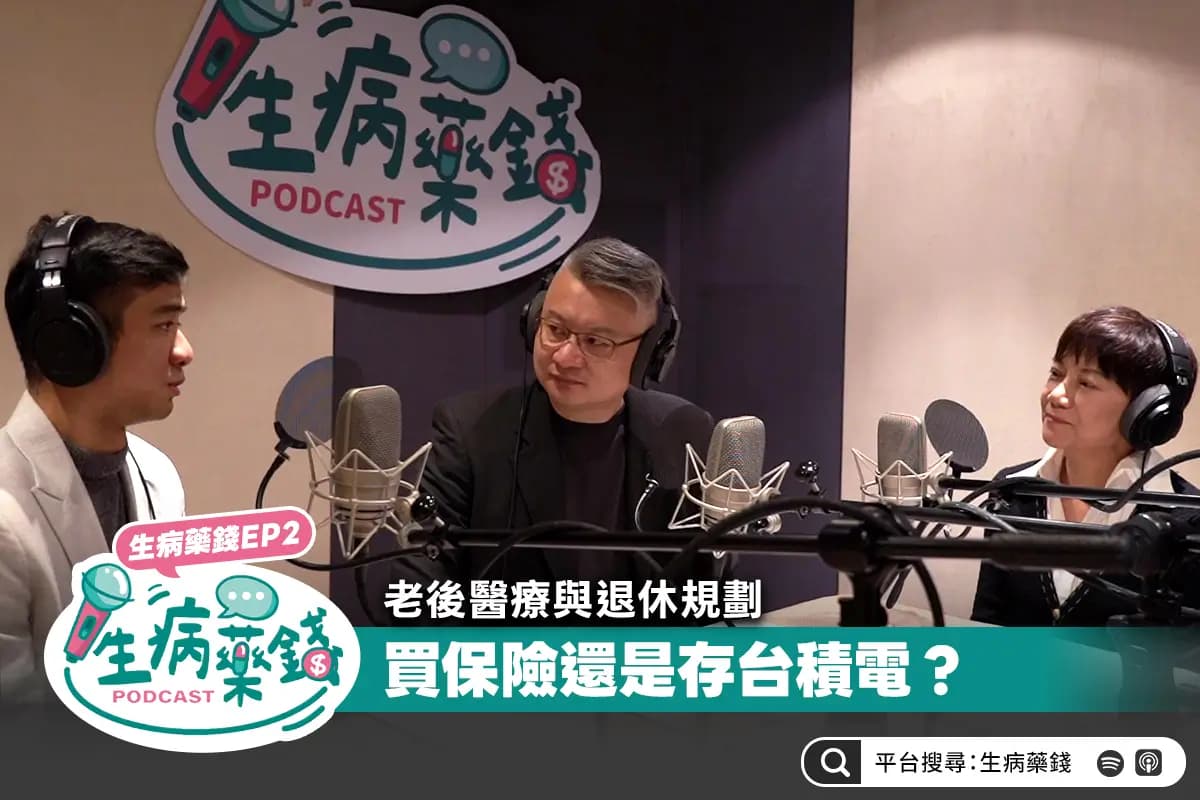
Old-age healthcare and retirement planning: buy TSMC or buy insurance?
A CFP-certified planner's view: insurance defends, investing attacks. Use the 60-30-10 rule and cash-flow planning to secure life after illness — in advance.

What does a day in the hospital really cost? Three hidden medical costs and the self-pay myth
Nurse practitioner Natti of Linkou Chang Gung's gynecologic oncology unit on the costs you never imagined but must pay: room differentials, special medications and the invisible expenses.